Preview
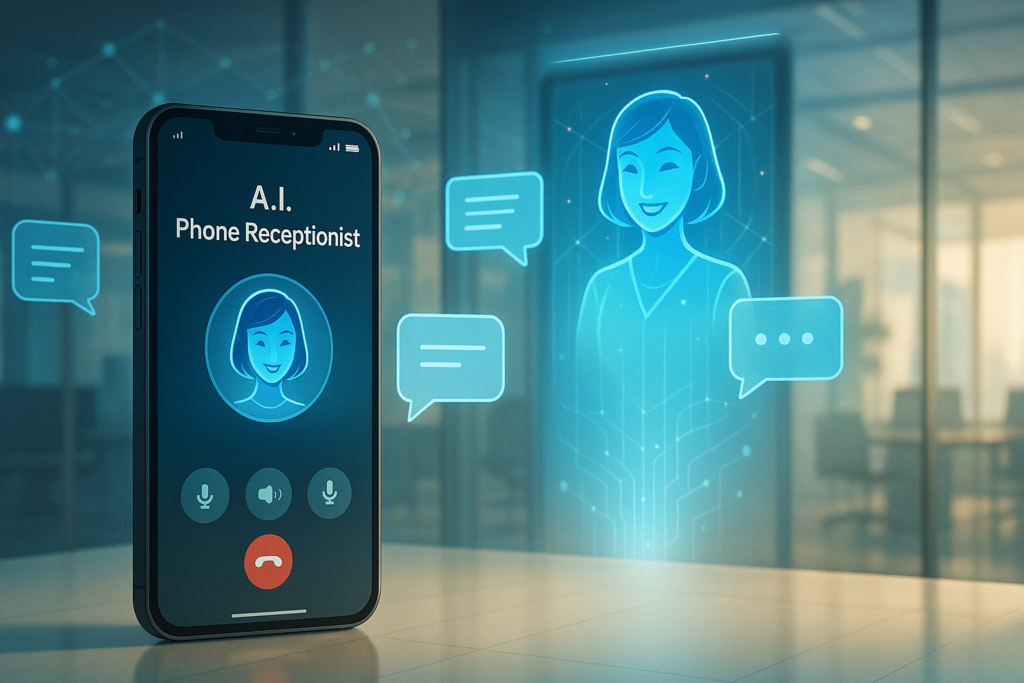
Most small businesses do not lose appointments because their calendar is wrong. They lose them because the appointment never reached the calendar in the first place. Somebody rings at ten past four. The owner is up a ladder, or with a client, or driving. He answers anyway, agrees Thursday morning, and writes it on whatever is nearest. A delivery note. The back of an envelope. His hand. He means to put it in the calendar when he stops, and most of the time he does. Most of the time is the problem. The one that does not make it is the one where somebody waits in all morning for a van that was never coming. Sync tools cannot fix a missing entry This is worth saying plainly, because it is where a lot of money gets spent on the wrong thing. Keeping a calendar in step across a phone, a desktop and a tablet is a solved problem. Keeping contacts matched between a CRM and a handset is a solved problem. Neither does anything for an appointment that was agreed out loud and never typed anywhere. There is nothing to sync. The gap is not between devices, it is between the conversation and the first device. That gap is where small businesses quietly lose a few jobs a month, and because nothing is recorded, nobody can count them. Three places appointments die The pad. Written down, never transferred. The note is still there a fortnight later under a pile of invoices. The voicemail nobody returns. Roughly four in five callers to a small business hang up without leaving a message. The ones who do leave one are competing for attention with everything else that happened that day. The second person. Two people answer the phone, one calendar exists, and both of them book Thursday at ten. Somebody is getting a phone call they will not enjoy. Every one of those is a failure of transcription, not of scheduling. The decision was made correctly. It simply never got written down in the one place that matters. What actually changed For a long time the only way to close that gap was to pay somebody to sit near the phone with the calendar open. That worked, and for a business of a certain size it is still the right answer, but it is a real salary for a line that rings nine times a day. What changed is not that software can hold a conversation. Automated phone menus could do that in 1998 and nobody enjoyed them. What changed is where the answers come from, and more importantly, what happens at the end. The useful part is not the talking. It is that the thing answering can read the calendar, see which slots are genuinely free, and write the appointment straight into it while the caller is still on the line. No pad, no transfer step, no later. That is the whole of it. An AI phone receptionist ends the call with a row in the diary instead of an intention to add one later. Four things worth checking before you trust one They all demo well for the first thirty seconds. The differences show up afterwards. Does it see the real calendar, or a copy? This is the one that matters most and the one nobody asks. If it works from a list of times it was given last week, it will cheerfully double book you. It needs to read availability at the moment it offers a slot. Does it write back? Some only email you a summary and leave the typing to you. That is a nicer pad, not a solution. You want the entry in the calendar, with the name and the number attached. What happens when two calls arrive at once? Ask. If both are offered the same slot, you have bought yourself a new way to double book.…
Read article →